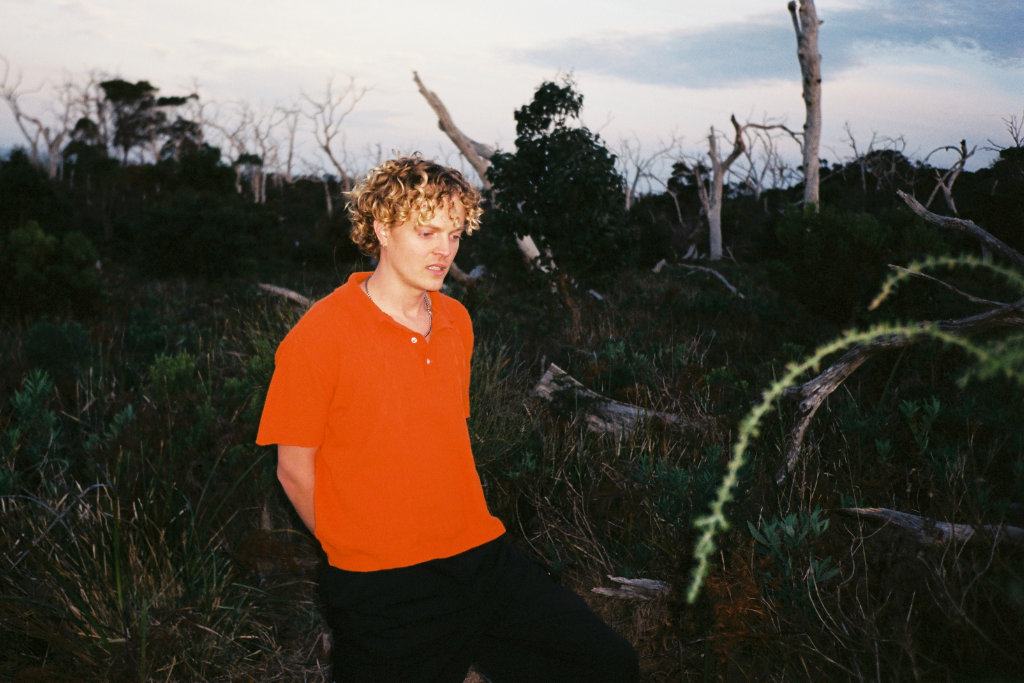
Icons: Ron Peno
Ahead of the launch of his debut solo album, PATRICK EMERY talks to Ron Peno about his early days in Brisbane, those heady years with Died Pretty and sharing a mulligatawny soup with Johnny Thunders.
In the mid 1970s a young Ronald S Peno, already impressed with the garage, trash and glam rock of the New York Dolls, MC5, Roxy Music and the Blue Oyster Cult, found himself immersed in the thriving inner-city rock’n’roll scene that had grown up around Radio Birdman. Peno formed his first band, The Hellcats, in 1976, before moving to Brisbane to form The 31st alongside Mick Medew. Peno and Medew co-wrote ‘Igloo’, the now classic Australian independent single recorded and released by Medew’s subsequent outfit, The Screaming Tribesmen.
While in Brisbane, Peno had forged a platonic and musical friendship with Brett Myers, guitarist and songwriter with The End. After Myers moved to Sydney, he put a call out to Peno to join his fledgling band, The Died Pretty. Combining Myers’ Velvet Underground-infused riffs with Peno’s distinctive melodies and country-styled lyrics – augmented by Peno’s distinctive whirling dervish dance moves, The Died Pretty became a favourite of the Australian independent music scene on the back of such classic tracks as ‘Stoneage Cinderella’, ‘Out of the Unknown’ and the epic ‘Mirror Blues’. Died Pretty – the definite article was gradually dropped from the band’s title – also undertook the first of its regular European tours, finding immediate favour with crowds in France, Italy and Spain.
With the release of Doughboy Hollow in 1991, Died Pretty hit a critical and commercial peak. The band signed to Sony, but found it difficult to build on the success of the album. Myers and Peno began to steer Died Pretty away from the sound of earlier records, and toward a more electronic sound inspired by Lou Reed’s Metal Machine Music. While Myers and Peno remained creatively inspired, commercial interest began to dry up, and Died Pretty found itself overtaken by other Australian bands who’d successfully surfed the independent wave generated from the structural changes in the music industry in the early- to mid-1990s.
Died Pretty eventually called it quits – for the time being – in 2002, playing a series of shows around the country to its perennially loyal fanbase. Peno moved on, both artistically and geographically, when he moved to Melbourne and formed inner-city alt-country duo The Darling Downs with former Scientist Kim Salmon. The Darling Downs released two critically acclaimed albums, before Peno and Salmon put the outfit on the backburner, as each artist redirected his artistic gaze toward other projects.
In Peno’s case, it was time to move out from under the relative pseudonymity of a band moniker and embark on a solo career. Peno approached Cam Butler (Silver Ray) at a gig in Melbourne with the prospect of a songwriting collaboration, and the seeds of Peno’s latest musical project were sown. Initially known as RSVP and the Return to Senders (the name took its inspiration from Peno’s initials), Peno and Butler called in guitarist and keyboard player Tim Deane (Hired Guns), bass player Andy Papadopoulos and drummer Mark Dawson (Ed Kuepper). After a six-month induction period in the local Melbourne live scene, Peno renamed the band Ron Peno and The Superstitions and entered the studio to record what would become the Future Universe album. In the meantime, Peno found time to reunite with his Died Pretty colleagues for this year’s Cherry Rock festival in Melbourne, and with Kim Salmon for a one-off Darling Downs gig at the Old Bar, also in Melbourne, in early 2011.
I caught up with Peno over a combination of white wine, chardonnay and black coffee.
Was The Hellcats the first band you were in?
Yes.
And they played mainly covers?
Yes. The Hellcats formed in 1976, I think. We played covers, and we achieved nothing. The only thing we achieved was that Radio Birdman took us under their wing and that’s how I got to know Rob Younger and Deniz Tek. We did quite a few supports with Radio Birdman.
The Birdman scene from that time is often mythologised. What are your memories of it?
It was very cliquey. As I’ve said to many other interviewers, at the Oxford Funhouse Johnny Kannis wrote up a bunch of rules – you weren’t allowed in if you had platforms, long scarves, silk pants, whatever. It was nice, and it was fun. But even before then I’d watched a show called GTK and it had a wonderful person by the name of Lillian Roxon – what a woman! I was watching GTK and Molly Meldrum asked her what bands she’d seen, and she’d just been in America, and she said, “I really like this band called the MC5”, so I went and bought Back in the USA, and it was real rock’n’roll. I also bought an album called Tyranny and Mutation by Blue Oyster Cult. And then I saw another album a few years later by the New York Dolls – what an album cover! That’s me (laughs). Through all of that I went to Sydney, and I read about this band called Radio Birdman whose influences were, to name some, New York Dolls, MC5 and Blue Oyster Cult. I thought, “I’m not alone!” So I formed a band.
Did the Hellcats ever record anything?
I think the drummer might’ve recorded something. We just did New York Dolls, Flaming Groovies, The Stooges, and some garage ’60s stuff. I think we were just caught up in the whole fun side of it. Charlie [Georges], the guitarist, and I tried to write something but nothing came of it. I don’t know why – we’d have a verse or a chorus, but it never went beyond that. But the Hellcats only last five minutes, anyway. [Laughs]
‘It was a police state!’
After that time you moved up to Brisbane. At that time Brisbane was a place people tended to leave, rather than move to. So why did you move up there?
A friend said, “Come up to Brisbane, we’re looking for a singer.” The short story is that I went up to Brisbane, and I couldn’t believe when I got up there. It was a police state! I kept get pulled over for walking down the street: “You’ve got long hair mate.” It was insane!
So what was it like playing gigs in Brisbane at that time?
I’d met so many great bands – The Go-Betweens, Zero, JFK and the Cuban Crisis, The Riptides, Ups and Downs. There was this lovely communal band thing happening. We just played venues around the place, and that’s how I met Brett Myers – Brett had a band called The End. My band was called The 31st and I went to see this band called The End with a couple of members from The 31st. The Fun Things with Brad Shepherd were also up there. I thought The End were fantastic. I just loved it when Brett said, “This is a song called ‘Wet My Bed’, and they did this Iggy song off a Stooges bootleg. And the other members of The 31st said, “They’re doing a song off a Stooges bootleg!” So Brett and I just palled up. We had stuff like the Dolls and Roxy Music in common.
There’s a song by The 31st on the Do the Pop compilation. Is there anything else lying around?
The 31st was when I started to write songs, and collaborate with other people. I wanted to write songs. Mick Medew, who later formed The Screaming Tribesmen, was the guitarist in The 31st. I said, “Let’s write some songs together”, and ‘Igloo’ was the first song we wrote together.
So you were doing ‘Igloo’ together in The 31st?
Yes. I wish I had a recording of that version – it was a bit more John Cale than the Citadel release. We did ‘Stand Alone’, which Screaming Tribesmen released as their second single – they were the first two songs Mick and I wrote together.
‘A combination of a whole bunch of things’
Did you and Brett form The Died Pretty after your respective bands had broken-up, or had the seeds been sowed earlier?
It was just going back to Sydney and hooking up there – Brett came to Sydney with The End, and I was a groupie. [The Hoodoo Gurus] Brad [Shepherd] was also a big fan of The End, but they didn’t last long. There was a magazine at the time called RAM, and there was a journalist by the name of [Died Pretty keyboardist] Frank Brunetti writing for it. Frank adored The End also, and became very good friends with Brett. Once The End dissolved Frank said, “We should get a band together – I know this singer, Ron Peno.” It took a while for us to get there, but Brett and I became the nucleus of Died Pretty.
Didn’t Rob Younger play drums in an early version of Died Pretty?
He did for a couple of rehearsals. [A long discussion about The New Christs ensues, which is irrelevant for current purposes, suffice to say, Peno remains a close friend and avid supporter of both Younger and The New Christs.]
“We did realise *Doughboy Hollow* was special, though in the longer scheme of things I love the later albums more.”
Rob also produced a lot of the early Died Pretty material. How significant was Rob in creating the sound that came to define the band?
He just captured what we wanted. There was already a thing there that Brett and I had worked out.
What was Rob like as a producer?
He had some wonderful ideas, and put them forward. We’d say yes or no. Rob is a brilliant man. Brett and I already knew what we were doing anyway, so we didn’t need anyone to come in and give us direction.
You’ve said previously that Brett often came to the songwriting process with Velvet Underground-influenced riffs, while you were contributing lyrics with a country flavour.
I’ve always had that in my background, yes. Brett had this Velvet Underground thing, and we both loved The New York Dolls, so we had that trashy idea. I had this Gram Parson, country thing going and we also both loved Roxy Music – great band. It was a combination of a whole bunch of things.
Where did you get the inspiration for your on-stage dance moves?
I suppose James Brown, Ike and Tina Turner and the Ikettes doing ‘River Deep Mountain High’. I thought Michael Jackson was just a really cool dancer. And now I just do my own style.
‘Mirror Blues’ is a classic song from that early Died Pretty era. How did that song come about?
That came about from Brett and Frank having a jam at rehearsal, ripping off Suicide. I heard it, and came in with this “high-lonesome” country vocal, which usually wouldn’t work, but it did for us.
When you were writing songs with Brett did you sit down together and write?
Half and half, really. Sometimes we’d sit down together, but most times Brett would come along with some guitar ideas in the rehearsal room. He’d play something and I’d put a melody over the top and the rest of the band would come in. Brett’s a brilliant musical director. He’d know exactly what bassline he wanted, what he wanted keyboard wise, drum wise. As long as he didn’t touch my vocal lines, it was fine. [Laughs] He’d come in and direct what he wanted everyone to do – brilliant arranger.

‘Sony was really, really lovely’
When did the band first tour overseas?
1985 or 1986, I think.
Did touring overseas sustain the band, given the size of the crowds you managed to draw overseas?
Free Dirt had come out, and that was quite well received overseas. They adored us in Italy and France on the basis of that album. We were like demigods – it was weird. We went back every year for the next few years.
Did you ever think about relocating to Europe?
No – if we did, we never told each other. I wanted to re-locate the band to Melbourne back in 1985, because it was where we were most well loved.
Doughboy Hollow is seen as your most successful album.
We’d obviously turned a corner with that album – though it’s not one of my favourites. During the recording and demos I said to Brett that I thought we’d matured – the songs were very powerful, but it’s not one of my favourite albums. I prefer later albums like Using My Gills as a Roadmap and Soul, which came out much later. But we did realise Doughboy Hollow was special, though in the longer scheme of things I love the later albums more.
It was partly on the strength of Doughboy Hollow that you were signed to a major label. How did that affect the band?
It was weird back then, signing to a major label – it was like you’d sold out. But Sony was really, really lovely. We gave them what I consider our weakest album, which is Trace. I never liked the album at all. [Sony managing director] Dennis Handlin said to me, “I wish you’d given us Doughboy Hollow.” [Laughs]
Looking back on it, why do you think Trace is such a weak album?
I was weak in my decision-making in saying yes or no songs. We had Hugh Jones coming back out to do the album, but it was a bit too soon for him to come out. But I don’t think the songs were strong enough – there were some good songs, but there were some very weak songs, and I should’ve said that at the time, but I didn’t. I took a weak-arsed approach.
Were you encouraged to get an album out once you’d signed?
Not overly. For myself, at that period, I could’ve said, “Stop, right now”, whether Hugh Jones was coming or not. We could’ve pushed it out a month or so, but we didn’t. People love Trace, but for me personally I thought it was some of my weakest songwriting, and some of Brett’s weakest songs. Unfortunately for us, it was our first album on a minor label – although it did really well overseas. I wish we could have cut out Trace, and gone straight to Soul and Using My Gills As a Roadmap.
‘We’d had a good innings’
There’s a school of thought that the later Died Pretty albums didn’t sell as well because they were departed from the prototypical Died Pretty sound. In hindsight do you feel content that you pursued a different artistic direction, rather than creating Doughboy Hollow Part II and raking in the cash?
Brett and I couldn’t have done that. We knew that we’d slipped up a bit with Trace, but I love Soul. When Using My Gills As A Roadmap came out, Brett and I were out one night and I said, “I’ve got a great idea for a song title – “Paint it black, you devils”, which is the line from the crowd on [The Rolling Stones’] Get Yer Ya-Yas Out. And Brett suggested we use that bit as a sample, so that’s where that idea came from. That was a stroke of my genius! [Laughs]. There’s a Stones line or Stones idea in each Died Pretty song.
I remember you telling me a story once about meeting Johnny Thunders while on tour in Europe. What was that like?
He was gorgeous. I was besotted. We were in France and Died Pretty were playing with Johnny Thunders, and we were watching him – I think we went on before him. There were these French people saying we should go on after him, that he was shit, and I was like, “Are you kidding! That’s one of my all time heroes from one of my all time favourite punk bands, The New York Dolls!” I was almost hysterical backstage! We went out to dinner, and he was so fucking gorgeous! We shared a mulligatawny soup together. [Laughs]. And then a few years later he was gone.
So, in the end why did you decide to break Died Pretty up?
We’d had a good innings. We’d been together for almost 20 years. After every Every Daydream, our last album – I love that album – it got more electronic. The kids didn’t like it, the general public didn’t like it ... I guess we’d flat-lined as a band. We didn’t go onward and upward like The Cruel Sea or Powderfinger; we didn’t come up with another Doughboy Hollow. I remember Brett rang around the time of Using My Gills As A Roadmap, saying, “I don’t know whether I’m going mad, or I’ve got the next album – doing acoustic things with samples. Like sampling Metal Machine Music or Brian Eno.” I said. “That sounds fantastic.” Every Daydream was a bit more electronic, a bit more sampling, and then Brett and I said, “Let’s pull it up now, and say goodbye.” I said we should release a farewell, which was My Generation Landslide.
Were the songs on Noises and Other Voices [the album released by Peno and Myers in 2007] notionally Died Pretty songs?
Yeah, for the next album. Our manager at the time said nobody would be interested, so we decided to say goodbye, which we did.
Was it emotional playing those last shows?
Not really, no.
Do you think you could have sustained Died Pretty playing the European festival scene?
No, there wasn’t enough interest. We reformed for the “Don’t Look Back” shows, we did the Big Day Out, and there wasn’t any interest overseas.
So what led you to reforming earlier this year for the Cherry Rock show?
James Young approached us, and I really love James. So I rang Brett, and he was up for it. It was just old friends getting together to play some songs. It gave us an opportunity to get Chris Welsh out from Thailand, where he lives these days. We don’t get to see Chris much these days. And [John] Hoey, it was great to see him as well. It was very emotional, and we probably won’t do it again. And the money was good – let’s be honest, there are bills to pay, and the money helps.
What about Frank Brunetti. Is Frank involved in music at all these days?
No, he’s not playing. Frank still loves music, but there are other things in his life at the moment.
‘I’ve had this bluegrassy, country thing about me’
You ended up moving down to Melbourne about 10 years ago, is that correct?
Yes, I moved down here in the beginning of 2003. What a wonderful city!
Having spent most of your musical life in Sydney, how did you compare the music scene in Melbourne compared to Sydney?
The music community down here was about a billion times better than Sydney! I’m never losing this city – it’s so fucking gorgeous! I’ve so many wonderful people whose hearts are really into it. You go into a pub, walk upstairs and there’s a band room where you can just groove to something and have a few drinks and meet a few friends – you can’t do that in Sydney.
When did the idea for the Darling Downs come about?
It wasn’t in Melbourne. I’ve had this bluegrassy, country thing about me. When I’d moved to Melbourne I went out to the Corner Hotel to see The Moodists and I saw Kim [Salmon] there. I suggested we do an acoustic thing together and write some songs. I didn’t think anything would come of it, but a few days later Kim came over to my place with a dictaphone full of country and bluegrass melodies. I don’t think Kim was overly familiar with the bluegrass I was into – I mentioned the Louvin Brothers, and said I wouldn’t mind modelling what we were doing on the Louvins. I gave Kim a copy of The Louvin Brothers’ Satan Is Real. We rehearsed a few times and it was sounding good, and we were thinking about what to call ourselves. I said, “What about K & R Darling Downs?” and [the Hoodoo Gurus’] Dave Faulkner said, “Just call yourself The Darling Downs”, so that’s what we went with.” We decided we’d be a cross between The Louvin Brothers and GQ Magazine, so we’d dress in suits and ties. It’ll be a cross between the 1940s and GQ Magazine. [Laughs]
So is The Darling Downs finished now?
I don’t know. I suppose we could do another album, but we haven’t talked about it. Kim’s got other projects going at the moment. But a lot of people like those Darling Downs records.
The second Darling Downs album is discernibly different to the first record.
Yes, the second album is a lot darker. I think that threw some people. I love the first album – it’s mysterious and distant – but the second album is totally dark.
You did play a show not that long ago with Kim at the Old Bar.
Yes, Kim was doing a residency at the Old Bar, and for the final show we did a Darling Downs show. It was a lovely show. Someone [M+N photographer Robert Carbone] videoed the show, and Kim sent me a copy of it, and it’s really good. We’re thinking we might even release that on DVD one day, and maybe with some unreleased Darling Downs tracks. That’s still up in the air at this time.
You’ve also become a regular guest on stage with Black Cab. When did you first see Black Cab?
I’d heard Altamont Diaries, and I went to see them at the Harvest Festival. Back then they’d only play once every six months. I said to my ex-partner that we should go and see them. They were playing at about 11am, and I normally wouldn’t see a band at that time. And they were magnificent. I went up to them afterwards and said we should do something together. About a year or so later something came together.
So with ‘Ghost Anthems’ [the song co-written by Peno and Black Cab] did you write the lyrics to an already written track?
They gave me some instrumental music, and then I wrote the melody and gave it back to them, and they loved it, so then I wrote lyrics to it.
‘It was like starting over again’
Moving on to your solo guise, was it a big thing for you to decide to write and perform under your own name?
Even before The Darling Downs I’d been thinking about it. Writing and performing is really the thing I do best. So after The Darling Downs I thought I couldn’t form another band, so I’d do my own thing. I was at Yah Yahs seeing Penny Ikinger, and she introduced me to Cam Butler. I love Silver Ray, so I asked him if he’d be interested in writing some songs, and he said yes. So a couple of days later Cam rang me up and came over to my place to start writing songs.
Did you have a particular idea in mind when you started writing songs with Cam?
We sat down and talked about the direction we’d like to go, song-wise. I really liked the orchestral stuff that Cam has done with Silver Ray and his solo work, and that appealed to me. So when he came over he had some instrumental song ideas already. Cam’s worked occasionally with singers on particular songs, but not on a full album. The first song we did was ‘Forgive Me’, which we do in the live set, but isn’t in the live set. Things fell into place pretty quickly. I think he liked my way with melody.
So it was that orchestral thing that Cam had been doing, combined with, I suppose, my Died Pretty style. At the time I was also really into Burt Bacharach and Jimmy Webb, and I suppose I was also conscious of my age and wanting to do something different – I wanted to make the songs really rich and beautiful, with lots of heart and soul. I was also listening to a lot of Bowie – especially Young Americans – I love the way he sang on that album, and the melodies. Songs like ‘Fascination’ – what a beautiful song!
Where did you find the other members of your supporting band?
Cam just said he knew this bass player, and this drummer, and this keyboard player and guitarist. They’re all brilliant players. I didn’t know enough people to put into a band, so I just told Cam if he knew some people to bring along to rehearsal. And I’ve known Mark Dawson for a while. He makes it so effortless when he’s on drums.
Why did you decide to change the name from RSVP and The Return to Senders to Ron Peno and the Superstitions?
I thought RSVP and the Return to the Senders was quite good, but some people told me that no one knew who or what RSVP was, so they said I should have my name out the front. So I changed the name so people would recognise the band. And a couple of the guys weren’t that keen on The Return to Senders, so we changed that as well. It was like starting over again. [Laughs]
You’ve been quoted recently as saying that Future Universe is the best thing you’ve done since **Doughboy Hollow. Why is that?
I think the songs Cam and I have written are really strong – they’re very strong in structure. And some of the melodies I’ve come up with are the best I’ve come up with are the best since Doughboy Hollow.
Did you focus on creating an album, or is it a collection of songs?
I just love the idea of writing songs – the melody, whether it needs a middle-eight, that sort of thing. After we’d been playing for a while we realised we had enough for an album, and we started talking about recording an album. I was so lucky to be surrounded by this group of incredibly talented people to play the songs.
What was the production process for the record?
Cam and I produced the album. I was very lazy in Died Pretty, but I’ve taken a lot bigger role in Ron Peno and The Superstitions. Cam did all the string arrangements on the album. I think Cam’s a genius! Everyone comments on how wonderful the strings are! Cam did not want synth strings – he wanted real strings on the album, and that’s what we got for these beautiful songs.
Do you expect to do a second album?
We’ve definitely got enough songs for a second album. It will depend, I suppose, on how much people like this album.
"[Richard Kingsmill] actually sent through an apology that Died Pretty didn’t make the triple j Hottest 100 Australian Albums Of All Time. That was very kind."
When you were playing with Died Pretty things were significantly different in the music industry. Do you think it’s easier or harder to be a recording artist these days?
When I was with Died Pretty it was all about getting a record label contract. But I’m finding it easier these days. We’re older these days; we don’t expect as much these days. For Future Universe we could do a lot more by ourselves. Back in the day you had to go into a studio and spend a couple of weeks there to do everything. But now you have this freedom – you put the basic tracks down in the studio, you go away, then you come back. You have much more time.
Will you be playing the album outside of Melbourne?
There was talk of it. But I don’t want to go to Sydney and play in front of 30 people. I’d like to wait until the album’s out, and see how people like it, and then think about playing interstate – or even overseas. Playing in Melbourne, there’s such a beautiful community here, people support each other, lots of collaborations.
Back in the day you were all over triple j. What’s been the reaction of triple j to Future Universe?
We sent the album to Richard Kingsmill. From what I’ve heard, Richard does like the album. He actually sent through an apology that Died Pretty didn’t make the triple j Hottest 100 [Australian Albums Of All Time]. That was very kind, but I’m not really worried about that – that’s in the past. Future Universe – future now!
+
Sweet interview. I might have to get my arse down to the NSC for the launch tonight.
It would be great to see The Darling Downs playing more gigs. The residency they did at The Vic in Brunswick a few years ago still rates as some of my favourite live performances ever.
what i have heard on the radio from this record is great
Was brilliant in trio mode before Campbell / Lanegan shows a week ago.
The Darling Downs Live At The Old Bar DVD is happening, I am so happy to report. The cat is out of the bag now! ㋡
it was called ''sold'', wasn't it?
SOLD!
I've only had it for a couple of months, but I think that second Darling Downs album From One to Another is just a classic record.
one word for rons performance last night: SENSATIONAL!
great album. top interview.
Agreed, the new album is pretty cool.
Am I missing something deep or is this a mistake?
Love reading this type of stuff. The End was one of my first live music memories as a 16 year old (easy to sneak into bars in Brissie then) at the 279 club with the Black Assassins. Brett still stands the same way when he plays. Died Pretty was and still is one of my favorite and regular play-list inclusions. Love the new album from Ron and the band too, bought it last week - great listening.
i thought it was a gag.
Appearing today at Basement Discs, Melb: 12.45pm
A little birdy says The Darling Downs are ready to record another album and have a residency slot booked in at The Old Bar in May.
Weird huh? Ron likes the later Died Pretty albums better than the early ones. Check out these bits on Died Pretty http://cardrossmaniac2.blogspot.com.au/search?q=died+pretty